Saturday, January 12, 2013

Exhilaration and Disappointment

So here we are, NFL playoff time.  The word fan comes from the word fanatic.  Well I'll admit, I am a fan(atic) of the Green Bay Packers! 

I will post this on Saturday, January 12th; the day the Green Bay Packers take on the San Francisco 49ers in the second round of the playoffs.  These are two of the elite teams in the league, but after Saturday one of these teams will be finished for the season.  After all of the off-season conditioning, the gruelling summer training camp, the weekly grind of film review and practices in preparation for an upcoming opponent, the highs and lows of victory and defeat, the come-from-behind "gut check" wins and the crushing losses - after all that, one team's season will fall short of the goal of winning the championship.  The winner will move on and again the difference between exhilaration and disappointment will come down to one game.  And for many fans it's just as dramatic.

  
Bart Starr - 5 NFL Championships
Joe Montana - 4 NFL Championships
 

I have followed football and my team the Packers for over 30 years.  As a fan I've experienced the fortunes and misfortunes of my team as well as some fantastic football games generally.  When I was younger I used to "live and die" with my team, as they say.  If the Packers won a game on Sunday afternoon then my whole week was better.  If they lost, well that put a damper on the following week.  As I've grown older I've learned to appreciate the game as a game.  My life doesn't depend on the outcome.  A Packer victory is still a great joy and a loss is a disappointment, but it's a sport and for every winner there's a loser.  The game of football is still a lot of fun whatever the outcome.


God doesn't lean

It's probably natural that when players or fans feel they have such a personal stake in the outcome of a game, they'll implore divine assistance.  There's a famous play in football called the "Hail Mary."  As most of you know, this is a play of desperation where the quarterback throws a long pass into the endzone, with only seconds left on the game clock, in the hopes that one of his receivers in a mob of the opponent's defenders will catch the ball, thereby scoring the winning points in the game.  The play became widely known as the "Hail Mary" after a playoff game between the Dallas Cowboys and Minnesota Vikings on December 28th, 1975.  Cowboys quarterback Roger Staubach heaved a game-winning touchdown pass as described above in the final seconds of that game.  Staubach is a Catholic and after the game he told a reporter about his desperate pass, "I closed my eyes and said a Hail Mary."

Regarding the Cowboys, their previous stadium had a domed roof with an open space over the playing area.  Cowboy fans said the hole allowed God "to watch his favorite team."

I've read that in the old days some Polish patriots declared, not completely seriously I assume, that God spoke Polish.

Once when I worked at Ryder Logistics & Transportation I had a discussion with a co-worker about politics.  He and I basically shared the same opinions on politics, but at one point in our conversation I remarked that "we have to be careful not to think that God is a Republican."  My co-worker responded, "No, but we know which He leans." 

Well, of course God doesn't lean.  If anything, we ought to be "leaning" toward God.  God is not a political partisan any more than He's a fan of a particular sports team.  But in our politics we ought to consider how to act in the light of God's will. 

As far as sports go, sport should be an occasion of good-natured competition and play.  It should bring out the best in both participants and spectators.  Learning to deal with defeat can be healthy; it can humble us, can cause us to dig deeper into ourselves in order to improve our game, and we can learn to appreciate greatness in our opponent (the Vikings' Adrian Peterson running for 199 yards against my Packers in the regular season finale being a good example of this).  Victory can be instructive too: we can learn to be gracious toward our defeated opponent.  Or, if we have serious personal shortcomings, hopefully in the glow of victory we will see that our personal defects are still there.  The people that we hurt still hurt; the time we've wasted on selfishness is time still lost; our destructive habits are still lurking there.  Those things put winning a game into perspective.

So on that note, let's enjoy some great football.

Saturday, January 5, 2013

We Three Kings

I was a weird kid.  I enjoyed studying maps and calendars - maps especially.  It baffled me when in primary school the teacher would call students up to the big wall map of the United States and many of my classmates couldn't locate the Mississippi River or even our home state of Wisconsin.  Sometimes I'd copy maps out of an atlas or even create my own fanciful geography of island nations with cities, roads and railways, seas, rivers and mountain ranges.  Once I got a set of markers as a present for Christmas and quickly used up the green and blue ones making maps.

But I liked calendars too and I remember once seeing the word Epiphany on January 6th.  I asked my then step-mother what that was.  She told me "it's something Catholics celebrate."  When I asked what it was about, she couldn't tell me.

Epiphany is an old Greek work meaning "manifestation" and in Christianity is used to describe the revelation of God the Son as a human being in Jesus Christ.  Since as early as the 4th century the holiday of Epiphany has traditionally been celebrated on January 6th.

This revelation of God in the person of Jesus, the Incarnation, covers such events as the angel's message to the shepherds, the visit of the wise men, the baptism of Jesus in the Jordan and the wedding miracle at Cana.  In the Roman Catholic Church the emphasis nowadays is on the visit of the wise men to Bethlehem.

These men have been variously described as wise men, magi or three kings.  Scripture doesn't say how many they were and their number in Christian tradition has fluctuated, with I think as many as seven in some accounts, but over time the number three was settled upon.  Three happens to be the number of the gifts they brought to the newborn king: gold, frankincense and myrrh.

The gift of gold points to Jesus' kingship since gold was an expensive, kingly gift.  Frankincense refers to his divinity.  Incense has a strong spicy odor when burned.  It was burned at the altar in the Temple in Jerusalem; Revelations 8:4 mentions it being burned before the Lamb in heaven where it represents the prayers of the saints; and incense is burned during portions of the Catholic mass at certain times of the year.  Myrrh refers to the mystery of Christ's passion.  Myrrh is a fragrant ointment that was used in some ancient cultures to annoint the bodies of the dead (see John 19:39).

The Star of Bethlehem

Much has been written over the centuries about the star that the wise men followed in order to visit Jesus.  In what we now regard as the 6th century A.D., the monk Dionysius Exigus calculated the year of Jesus' birth; in other words the "year zero" which forms the basis of our current system for numbering the years.  It's why we call this year 2013; it's 2013 years since the birth of Christ according to Dionysius' calculations.  Anway, he seems to have miscalculated and it's generally believed now that the birth of Christ happened between 7 and 6 B.C.

All this is important in regards to the star mentioned in Scripture that guided the wise men to Jesus.  Astronomer Johannes Kepler in the 17th century calculated that in the year 7-6 B.C. there was a conjunction of the planets Jupiter, Saturn and Mars.  Kepler witnessed this same very bright conjuction in 1604.  In the 20th century, astronomer Ferrari d'Occhieppo confirmed the conjuction of the planets Jupiter and Saturn in the constellation Pisces in 7-6 B.C.  Also, a reference has been discovered in Chinese chronological tables that in 4 B.C. "a bright star appeared and was visible for quite a long time."

Going back to the planets Jupiter and Saturn, Ferrari d'Occhieppo states "Jupiter, the star of the highest Babylonian deity (Marduk), entered its brightest phase when it rose in the evening alongside Saturn, the cosmic representation of the Jewish people."  Therefore, Babylonian astrologers such as the wise men would have concluded that a universally significant event was happening: the birth in the land of the Jews of a divine ruler.

According to the Roman writers Tacitus and Suetonius, there was much speculation in those days that the ruler of the world could emerge in Judah.  All of this is to demonstrate one point of the celebration of Epiphany which is the revelation of the light of the true God to the gentiles, the non-Jewish races in the world (see Isaiah 9:1 [2], Isaiah 11:10, Isaiah 42:6, Isaiah 49:6, Isaiah 51:4, Micah 5:1-4, etc.)


A question a person might ask is why, if there was a widespread expection of the birth of a great (even divine) ruler in Judah, did only the wise men make the journey?  Afterall, that was an arduous journey those guys made from Persia to Bethlehem, via Jerusalem.  In those days they didn't have road maps (though we can think of the constellations as the orginal GPS).  They didn't have highway rest areas with picnic tables and drinking fountains.  There was no roadside assistance.  Highway bandits were a very real problem.  And the journey to Bethlehem and back probably took a year or two.

So why did these guys get up and go?  Pope Benedict XVI speculates in his latest book Jesus of Nazareth: The Infancy Narratives that as truth seekers, these men were inwardly disposed to the revelation of God.  They didn't know what we know in hindsight who this newborn king of the Jews really is (and neither did Mary or Joseph for that matter).  But like Mary and Joseph, they were open to the Truth.  And when the Truth spoke to them, they were prepared to hear it.  And to give their "Yes."  And to act upon it.

Are we?


Saturday, December 29, 2012

Five golden rings!

Twelve Days of Christmas

The 29th of December is the 5th day of the 12 days of Christmas.  This would be the part in the popular carol where the pace slackens a bit and we belt out, FIVE GOLDEN RINGS!!!

It's been a festive week around here.  There were 11 of us together for the traditional Christmas Eve meal followed by midnight mass.  On Christmas Day we had a big dinner here at home and then on the 2nd day of Christmas we went over to in-laws for another big dinner.  Not long and it'll be New Year's Eve.

Television here is packed with light-hearted movies and concerts of traditional carols.  It's a great time to rejoice and also to relax and recharge our energy.

The 12 days of Christmas are meant as a time for celebrating.  However, the Church calendar contains a few stark reality checks during these 12 days.

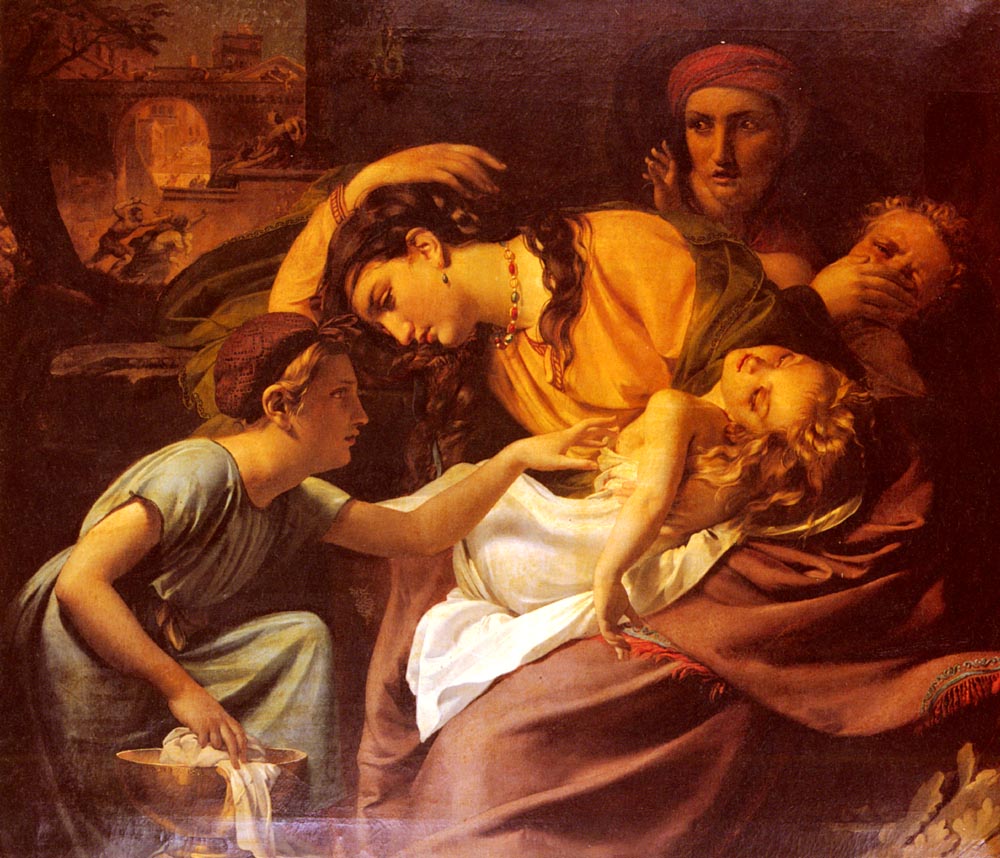
After the school shooting in Newtown CT 2 weeks ago, I began to think of the Massacre of the Innocents from Matthew's Gospel (which we commemorate on December 28th).  That's the part where King Herod, alarmed at the news the Magi brought him of a newborn King of the Jews, ordered all boys aged 2 and under in the area of Bethlehem murdered.  I wasn't the only person to make the connection.  Please follow this link for Mark Steyn's thoughtful take.  http://www.nationalreview.com/articles/336343/massacre-innocents-mark-steyn

 Here's a rundown of some of the major commemorations during the Christmas season.

December 26th - the Feast of Saint Stephen, Martyr.  He's the guy told of in Acts who was stirring up the people by preaching the good news of Jesus Christ.  He was eventually stoned to death.  The men stoning him "laid their cloaks at the feet of a young man named Saul." (Acts 7:58)  That same Saul would later be struck blind on the road to Damascus, would have his name changed to Paul, and be instrumental in spreading the good news of Jesus Christ through the eastern Mediterranean region as well as write a major part of the New Testament.  So, immediately following Christmas Day we get this story of the first Christian martyr - a reminder of what it means to follow Christ.

December 27th - the Feast of Saint John the Apostle and Evangelist.  John's Gospel begins like Genesis, but Genesis clarified in the light of Christ.  "In the beginning was the Word, and the Word was with God, and the Word was God.  He was in the beginning with God.  All things came to be through him, and without him nothing came to be.  What came to be through him was life, and this life was the light of the human race; the light shines in the darkness, and the darkness has not overcome it." (John 1:1-5)  John's Gospel emphasises the Incarnation - that God took on human flesh in Jesus Christ and lived among us - and so this is a fitting feast for the Christmas season.


December 28th - the Feast of the Holy Innocents. "A voice was heard in Ramah, sobbing and loud lamentation; Rachel weeping for her children, and she would not be consoled, since they were no more." (Matthew 2:18)  Please continue to pray for the mothers and fathers grieving in Newtown CT.

December 30th - the Feast of the Holy Family of Jesus, Mary and Joseph.

January 1st - the Solemnity of the Blessed Virgin Mary, Mother of God.

January 6th - the Solemnity of the Epiphany of the Lord.  'Epiphany' means manifestation or appearance.  This day is also know as the Feast of the Three Kings (or wise men, or magi).  This ends the 12 days of Christmas and I'll have more on this day next week.


News Year's Day

All is quiet on New Years Day,
A world in white gets underway.

Thus begins the song 'New Year's Day' by U2 (that's for you, J.P.)  Those words were penned by the singer barely in his twenties.  Perhaps they seem naive.  But later in the song comes this line: Nothing changes on New Year's Day.

So, what's it to be for us?  Hopeful optimism or jaded pessimism?

There's an expression I've heard from time to time that goes, "Today is the first day of the rest of your life."

It's never too late for a new start.  If we stumble and fall on January 1st; if we lose our patience with loved ones, tell a lie to avoid discomfort, cut corners and not do our very best, hold back when the opportunity comes to give somebody our time or help; we can stand up, brush ourselves off and start again on January 2nd.  Here's another line from the U2 song: I will begin again.

Every day is New Year's Day.


Saturday, December 22, 2012

Peace on earth

In those days a decree went out from Caesar Augustus that the whole world should be enrolled.  This was the first enrollment, when Quirinius was govenor of Syria.  So all went to be enrolled, each to his home town.  And Joseph too went up from Galilee from the town of Nazareth to Judea, to the city of David that is called Bethlehem, because he was of the house and family of David, to be enrolled with Mary, his betrothed, who was with child.  Luke 2:1-7


Saint Luke sets the time and place when God broke into human history in a dramatic way.  Caesar Augustus, as emperor of the Roman Empire, was considered divine and the empire was in the midst of a (relatively) peaceful age, called Pax Romana, or sometimes Pax Augusta.  Rome was secure and at peace, thanks to the divine emperor.

At the edge of this great empire - practically at the edge of the known world - in a dusty provincial outpost, a little Jewish boy was born.  And this Jewish baby was God himself; God from God, Light from Light, true God from true God, as we profess in the Nicene Creed.  This true God, unlike the divine emperor sitting in Rome, would usher a wholly different kind of peace into the world.

This peace is not the kind of political or social peace we usually think of.  When the wise men came to Jerusalem looking for the newborn king of the Jews, King Herod and all of Jerusalem became extremely agitated. (Matthew 2:1-3)  Herod would later order the slaughter of all the boys aged 2 and under in the area of Bethlehem in an attempt to eliminate what he understood as a rival to this power.  Herod's son and successor would later be bewildered by the adult Jesus.  The Roman governor Pontius Pilate would become unsettled when confronted with Jesus the accused criminal.  Pilate's wife even had an ominous dream about this righteous man. (Matthew 27:19)

Jesus has continuously made the comfortable uncomfortable right up to the present day.  Try talking about Jesus anywhere in public outside of church. 

Peace I leave with you; my peace I give you.  Not as the world gives do I give to you.  Do not let your hearts be troubled or afraid. (John 14:27)  The peace of Jesus Christ, the only true and lasting peace, is attained when we give our lives completely to Him, knowing that whatever happens to us in this world, Jesus is with us every step of the way and he will save us.  In the world you will have trouble, but take courage, I have conquered the world.  (John 16:33)


A place at the table

The word for 'Christmas Eve' in Polish is Wigilia.  Wigilia is a very important and special celebration in Poland.  Everyone wants to be with family on this day.  There are many traditions followed on Wigilia.  People fast during the day and then eat a traditional evening meal after the first star is spotted in the sky.  Before the meal there's the praying of the Lord's Prayer followed by family members going from person to person, sharing pieces of a blessed wafer (opłatek) and expressing wishes for the upcoming year (a very emotional moment with not a dry eye to be found afterwards). After the meal comes the exchanging of gifts and midnight mass.  One nice little custom is setting an extra place at the table.  This is done in case somebody in need comes to the door; that person would be invited to sit at the extra place prepared for them. 

A year ago a Polish film came out titled Listy do M (in English, Letters to S - 'S' as in Santa or Saint Nicholas, which is Mikołaj in Polish).  This film is one of those comedy-drama-romances.  In the beginning of the film we meet the various characters.  Their lives are intertwined or eventually will be.  There's a family of four: father, mother, disaffected teen daughter and grandpa.  The couple's marriage is an unhappy one.  The wife is cheating with a single guy who is currently working as a shopping mall Santa.  He's frustrated with his life.  There's a young woman, lonely and looking for romantic love, working alongside him as a shopping mall elf.  There's a popular radio DJ who's a widower raising a young son alone.  There's a childless couple whose lives are disrupted by the arrival of a runaway orphan girl. 

By the end of the film, each of them will be surprised by love.

For example, take the unhappy family of four.  They apparently haven't celebrated a traditional Wigilia in many years.  In a fit of desperation, on Christmas Eve the father packs the family in the car to take them to visit some relatives.  He and his wife get into a loud argument.  The teenage daughter mopes and scowls in the backseat, next to grandpa who seems delighted at the prospect of a good old-fashioned Wigilia.  The wife orders her husband to turn the car around and take them all home.  When he refuses, she grabs the wheel, causing them to run off the road in a wooded area.  The car is hopelessly stuck in the snow.  After some more shouting at each other, they all tramp off together to find a house where they can ask for assistance. 

They find a house and knock at the door.  Naturally, it being Wigilia, there's a large family gathering in the house.  The man and woman of the house both press the unhappy family to stay for Wigilia.  The house is warm and dry, the people are happy and friendly.  After some hesitation, the new arrivals agree to stay.  They begin to warm up - physically and emotionally - and eventually laugh together about their predicament.  Love is reborn in that family. 

They were strangers in need, and there was plenty of room for them at the table.


Everlasting

There are a thousand things more I could write about Christmas.  For me as a Christian believer it never gets old.  Every year the splendid beauty of it overwhelms me.  I've sang the carols a thousand times and yet often they still make my heart flutter and cause me to lose my breath.

Because of that astonishing birth in Bethlehem 2,000 years, the living flame of this holiday continues to burn.  No amount of crass commercialisation, loss of faith or indifference can extinguish the true meaning of this day.  The vulnerable baby lying in the manger disarms us. 

Brothers and sisters in Christ, I wish you peace, joy and love this Christmas and always.


Saturday, December 15, 2012

Rejoice!

Early in the morning of December 10th, 2005 - sometime around 3 a.m. - Renata nudged me awake.  "My water's broke," she informed me. 

This was the day we had been waiting for since we knew Renata was pregnant 8 months previously; the birth of our first child.

Somehow I managed to stay relatively calm as I quickly got out of bed and dressed.  We drove to the North Hills Hospital which was only 10 minutes from where we lived.  The nurse that examined Renata initially diagnosed it as a false alarm and was going to send us home.  But Renata insisted, "No, my water really has broke."  The nurse made us wait about 30 minutes before examining Renata again.  That time she confirmed what Renata already knew - this was for real.

Well, that was the beginning of a very long day.  We knew that we were having a girl and we'd already chosen her name, Emilia.  After they got Renata into a bed in a delivery room, another nurse began asking a list of questions.  I can't even remember now what most of them where, but one was "what is your religion?"  It only took me half a second to understand why they asked that.  If something goes terribly wrong, what type of clergy do they call?

Which reminds me that there was something of a little cloud hovering over this pregnancy from about the 5th month or so.  A sonogram had revealed that one of the 2 blood vessels in the umbilical cord that carries nutrients from the mother to the baby appeared to be underdeveloped.  Renata's doctor was upfront in explaining that this potentially could result in a birth defect.

Well, we prayed and a lot of people prayed for us and we put it all in God's hands.  None of the following sonograms had revealed anything abnormal in Emilia.

So, as I've already mentioned, that Saturday was a long, long day.  Renata would be in labor for about 22 hours.  Our little girl was in no hurry to be born! 

A nurse brought in a little snack-sack for me sometime that afternoon but I hardly touched it.  I should have.

By early evening Renata was in a lot pain and discomfort.  An anesthesiologist eventually came to give Renata an epideral shot.  He and a nurse asked me to support Renata while she leaned forward for the shot.  Since I had hardly eaten anything all day, I nearly blacked out.  The nurse gently chided me for not eating anything. 

The epidural did wonders for Renata's mood and I settled down to eat and get some energy.  It would be a long night yet.

So, to make a long story short, at 48 minutes past midnight on Sunday morning, December 11th, Emilia was born.  Renata's doctor looked Emilia over, smiled broadly and commented that she was a perfect baby girl - obviously referring to the question of the underdeveloped umbilical cord (which turned out not to be underdeveloped).  Shortly after, she handed me a pair of surgical scissors and I had the priviledge of cutting that umbilical cord.

Any parent reading this understands the joy and relief we experienced immediately following Emilia's birth.  She was absolutely beautiful.


Sunday, December 11th was the third Sunday in Advent that year.  As I noted in a previous post, the theme of the 3rd Sunday in Advent is joy.  I was aware of this and as the clock ticked toward midnight I thought how fitting it would be for Emilia to born on 'Gaudete Sunday.'  Gaudete is Latin for 'Rejoice.'

This year the 3rd Sunday of Advent is December 16th.

The first reading this Sunday really drives the theme home: Shout for joy, O daughter Zion!  Sing joyfully, O Israel!  Be glad and exult with all your heart, O daughter Jerusalem! from Zephaniah 3:14-18a.  The Psalm we sing this Sunday is actually from Isaiah 12, with the refrain being, Cry out with joy and gladness: for among you is the great and Holy One of Israel.  Then we get Philippians 4:4-7 with the lines, Rejoice in the Lord always.  I shall say it again: rejoice!  The Lord is near.

Advent is a penitential season and we are to call this to mind in this Sunday's readings, particularly in the Gospel from Luke 3:10-18, in which our Advent prophet John the Baptist speaks: Whoever has two cloaks should share with the person who has none . . . Do not practice extortion, do not falsely accuse anyone, and be satisfied with your wages . . .I am baptizing you with water, but one mightier than I am is coming.  I am not worthy to loosen the thongs of his sandals.